
Name one type of plant cell that has holes in it to allow substances to flow through.
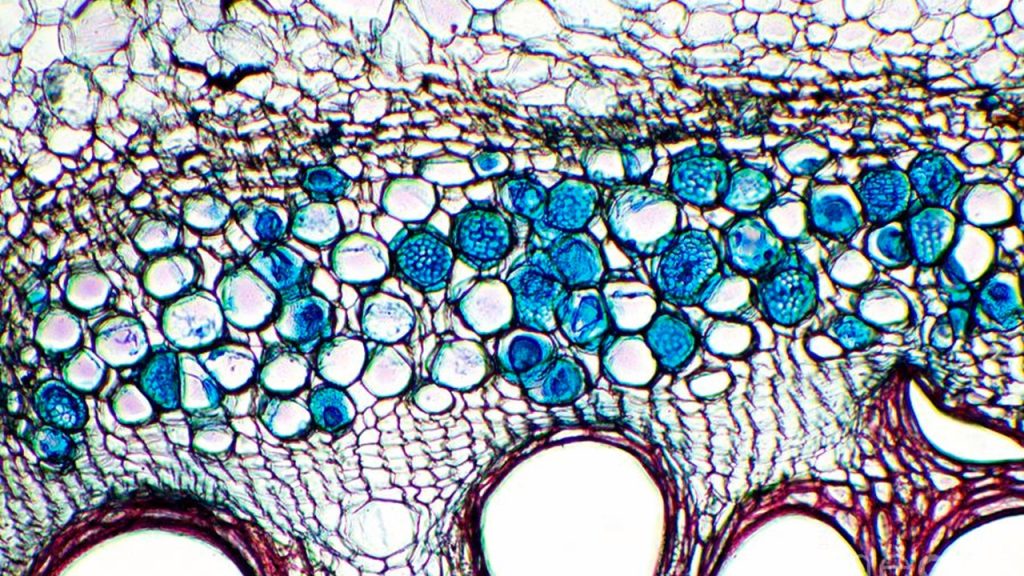
One type of plant cell that has holes in it to allow substances to flow through is a phloem cell, specifically the sieve tube element. These cells are a critical component of the plant’s vascular system, responsible for transporting organic nutrients, mainly sugars, throughout the plant. The structure and function of sieve tube elements make them highly specialized for this task, and the holes in their cell walls are a crucial feature in facilitating the flow of substances.
The Role of Phloem in Plants
The phloem is one of the two main types of vascular tissue in plants, the other being xylem, which transports water and minerals. Phloem, on the other hand, transports the products of photosynthesis—chiefly sugars, amino acids, hormones, and other organic compounds—from the leaves (where they are produced) to other parts of the plant such as the roots, stems, and flowers. This movement of substances within the plant is crucial for growth, energy storage, and reproduction.
The process of transporting nutrients in the phloem is called translocation, and it is an active, energy-dependent process that requires the cooperation of various cell types, including sieve tube elements, companion cells, and phloem parenchyma cells. Sieve tube elements are the main conducting cells in the phloem.
Structure of Sieve Tube Elements
Sieve tube elements are elongated, cylindrical cells that are stacked end-to-end to form long tubes. These cells are unique because they are highly modified versions of typical plant cells, with several distinctive features. One of the most striking features of sieve tube elements is the presence of sieve plates, which are perforated walls that allow for the passage of substances from one sieve tube element to the next.
The sieve plates are composed of areas of the cell wall that have numerous pores or holes. These pores are not simple holes; they are highly regulated and can vary in size, shape, and distribution depending on the plant species and the developmental stage of the plant. The sieve plates are a critical structural feature that facilitates the flow of phloem sap, which is a mixture of water, sugars, and other nutrients, between adjacent sieve tube elements.
The sieve plates are located at the end walls of sieve tube elements, where the cytoplasm of adjacent cells is connected. These holes in the sieve plate are wide enough to allow the passage of phloem sap but narrow enough to regulate the flow of substances. The flow is typically driven by pressure flow, a mechanism where the difference in pressure between the source (usually the leaves, where sugars are produced) and the sink (other parts of the plant where the sugars are used or stored) pushes the sap through the sieve tubes.
Companion Cells and Their Role
Sieve tube elements do not have nuclei or many of the other typical organelles that are found in most plant cells. Instead, they rely on companion cells, which are closely associated with sieve tube elements and play a vital role in maintaining the function of the sieve tubes. Companion cells have a full complement of organelles, including a nucleus and a well-developed endoplasmic reticulum, which allows them to provide energy and other materials to the sieve tube elements.
The companion cells are connected to sieve tube elements by plasmodesmata, which are microscopic channels that allow the exchange of materials between the two cell types. These connections also help to regulate the flow of nutrients and ensure the proper functioning of the sieve tube elements. The companion cells are thought to help load and unload the sugars into the sieve tubes, contributing to the pressure flow mechanism.
Sieve Tubes and Pressure Flow
The movement of substances through sieve tube elements is primarily driven by pressure flow or mass flow hypothesis. In this process, sugars and other nutrients are actively loaded into the sieve tube elements at the source (typically the leaves), which creates a high concentration of solutes in the phloem sap. This high concentration of solutes causes water to move into the sieve tubes by osmosis, creating a high turgor pressure in the sieve tubes at the source.
At the sink (such as the roots or growing stems), sugars are actively removed from the sieve tubes, lowering the concentration of solutes. This decrease in solute concentration leads to a drop in turgor pressure. The pressure difference between the source and the sink is what drives the movement of the phloem sap through the sieve tubes.
The holes in the sieve plates of sieve tube elements allow for the movement of the sap between adjacent cells. Without these openings, the pressure flow mechanism would not work efficiently, as the sap would not be able to move through the plant effectively. These pores are large enough to allow for the bulk flow of substances, yet small enough to ensure that the sieve tube elements remain relatively intact and are protected from physical damage.
Adaptations for Efficient Transport
In addition to the sieve plates, sieve tube elements have other adaptations that help maximize their efficiency in transporting nutrients. For example, the cell walls of sieve tube elements are relatively thin, which minimizes the resistance to the flow of sap. The lack of a nucleus in the sieve tube elements means that more space is available for the flow of phloem sap, allowing for more efficient transport.
Moreover, the end-to-end arrangement of the sieve tube elements forms continuous tubes that enable the bulk movement of nutrients over long distances within the plant. This arrangement helps to ensure that nutrients can be transported efficiently from the source to the sink without significant loss of pressure or flow.
Sieve tube elements, with their characteristic sieve plates and pores, are crucial for the transport of nutrients throughout the plant. The holes in the sieve plates are a defining feature of these cells and play a critical role in the process of translocation. By allowing the flow of phloem sap from one sieve tube element to the next, the sieve plates facilitate the efficient transport of sugars, water, and other essential nutrients throughout the plant. The structure and function of sieve tube elements, along with their specialized holes, make them an indispensable part of the plant’s vascular system.

Benzer Konular

PEKİŞTİRME ZAMANI Uygulama adımlarını takip ederek etkinliği yapınız. Uygulama Adımları ▶Tahtaya gelerek adınızı soyadınızı söyleyiniz.▶Sizi tanıtan özelliklerinizi (sevdiğiniz sanat ve spor etkinlikleri gibi) hareketlerle veya resim çizerek anlatınız.▶Arkadaşlarınızdan özelliklerinizi tahmin etmelerini isteyiniz.▶Etkinlik süresince arkadaşlarınıza karşı anlayışlı olunuz. Onları sabırla ve dikkatle izleyiniz. Soruları cevaplayınız. 1. Arkadaşlarınızla ilgili neler öğrendiniz? 2....

2. Köfte yapımının aşamaları aşağıdaki görsellerde sırasıyla verilmiştir. Görsellerden yararlanarak köftenin yapım aşamalarını yazalım. Cevap ve Çözüm Bu etkinlikte öğrenciler, görsellere bakarak sıralı işlemleri yazmayı öğrenirler. Köfte yapımı aşama aşama verilmiş ve öğrencilerden bu sırayı yazmaları istenmiştir. Böylece hem olayların oluş sırasını kavrama hem de yönergeleri takip etme becerisi gelişir.

Resmi kurumlara istekte bulunmak, şikayette bulunmak veya bilgi almak için yazılan yazılara dilekçe denir. Dilekçeler, vatandaşların kamu ile olan ilişkilerinde önemli bir araçtır. Anayasanın 74. Maddesi gereği, vatandaşlar dilekçe hakkına sahiptir ve bu hakka dayanarak yetkili makamlara ve TBMM’ye yazılı başvuruda bulunabilirler. Dilekçelerin resmi bir dil ve üslup ile yazılması...

THEMA 1–3 (ZAHLEN) Türkçesi: Konu 1–3 (Sayılar)Okunuşu: te-ma bir–üç (tsa-lın) 9 → neun 10 → zehn 11 → elf 12 → zwölf Özet Bu sayfada 9, 10, 11 ve 12 sayılarının Almanca karşılıkları verilmiştir. Öğrenciler rakamların yanında yazılışlarını, Türkçe anlamlarını ve okunuşlarını öğrenerek sayıları daha kolay kavrar. Böylece Almanca’da sayı...

Abim şu an 18 yaşında. 5 sene önce kaç yaşındaydı? Abinin şu an 18 yaşında olduğunu biliyoruz. Burada basit bir matematik işlemi yapmamız gerekiyor. Zamanın nasıl geçtiğini ve yaşın nasıl değiştiğini anlamak için önce şu anki yaşından başlayalım. Abin 18 yaşında demek, doğduğu günden itibaren 18 yıl geçtiği anlamına gelir....

Bilgi Açıklama Sınıf 4. Sınıf Ders İngilizce Yayınevi Learn With Bouncy Meb Yayınları Sayfa 25 Bölüm Unit 2 – My Compass – Activities 1-2 Konu Directions – Yönler My Compass İngilizcesi: My CompassOkunuşu: May KampısTürkçesi: Benim Pusulam Track 5 – Unit 2 Activity 1 İngilizcesi: Track 5 – Unit 2...
Bir Yorum Yazın
Ziyaretçi Yorumları - 0 Yorum