
A space lacking matter
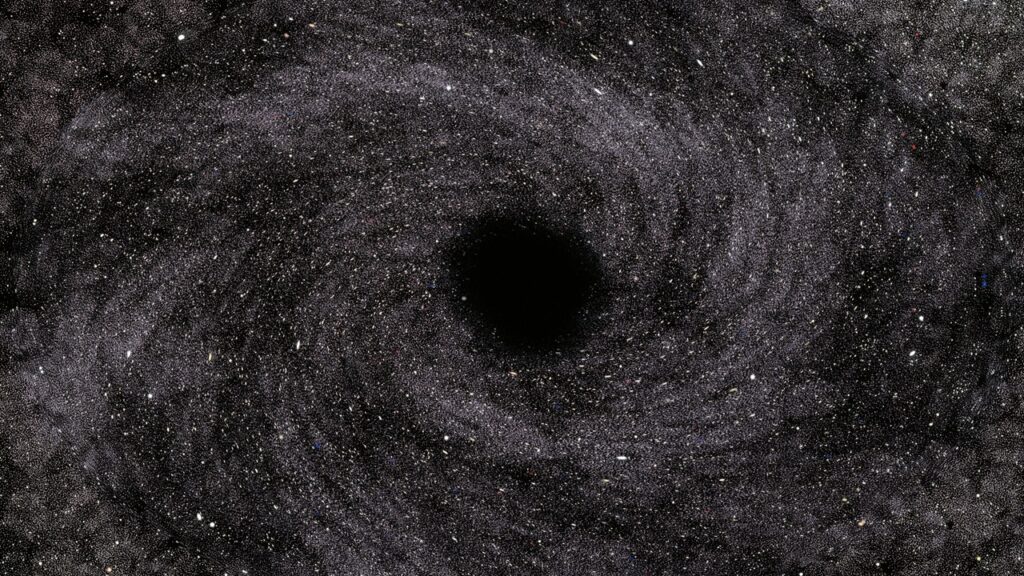
In both science and everyday life, there are situations where space contains nothing at all—no air, no gas, and no particles of any kind. It is an empty area where matter has been completely removed or is absent. Such an environment is often used in laboratories, space exploration, and various industrial processes, as it eliminates interference from air or other substances. The scientific term for a space that lacks matter is a vacuum.
The word “vacuum” refers to a space entirely or almost entirely devoid of matter—that is, it contains no air, gas, liquid, or solid particles. The concept of a vacuum is fundamental in physics, astronomy, and engineering because it helps scientists understand the nature of space, pressure, and energy. The term can also be used metaphorically to describe an emptiness or absence of activity, emotion, or influence.
From a linguistic and etymological point of view, the word vacuum comes from Latin, where vacuus means “empty” or “void.” It entered English in the 16th century through scientific Latin usage, reflecting the growing interest in understanding air pressure and the physical properties of space. The plural form is vacuums (common in everyday English) or vacua (preferred in scientific writing). The word is pronounced /ˈvæk.juːm/ in both British and American English.
From a scientific perspective, a vacuum is not a mystical concept but a measurable physical condition. It describes a region where the pressure is significantly lower than atmospheric pressure. On Earth, the air around us exerts pressure due to the weight of the atmosphere. When air is removed from a container using a pump, the pressure inside drops, creating a vacuum. The more air removed, the stronger or “higher” the vacuum. However, achieving a perfect vacuum—a space completely free of all matter—is practically impossible because even in the emptiest spaces, some particles and radiation remain.
There are several types of vacuums based on how much matter is removed:
- Partial Vacuum – A space where some air remains, but pressure is below the normal atmospheric level (e.g., inside a vacuum-sealed food bag).
- High Vacuum – Used in laboratories and industries, where only a few particles exist per cubic centimeter.
- Ultra-High Vacuum – Found in scientific research, particularly in particle accelerators and space simulations, where conditions are close to those in outer space.
- Perfect Vacuum – A theoretical concept referring to an area completely devoid of matter, achievable only in mathematical models.
In astronomy and cosmology, outer space is often referred to as a near-perfect vacuum. Between stars and galaxies, there are only a few atoms per cubic meter—a level of emptiness unimaginable on Earth. Despite this, space isn’t entirely empty. It contains traces of gas, cosmic dust, radiation, and even dark matter and dark energy. The “vacuum of space” also serves as a stage for fascinating phenomena such as the propagation of light, the motion of celestial bodies, and quantum fluctuations—tiny bursts of energy that occur even in empty space.
From a historical point of view, the idea of a vacuum fascinated ancient philosophers and scientists. The Greek philosopher Aristotle (4th century BCE) famously argued that a “true void” could not exist, stating that “nature abhors a vacuum.” For centuries, this belief discouraged scientific exploration of the idea. However, during the 17th century, scientists such as Evangelista Torricelli and Blaise Pascal challenged this notion through experiments with air pressure. Torricelli’s invention of the barometer (1643) proved that air has weight and pressure and that a vacuum could be created at the top of a mercury column. Later, Otto von Guericke built the first vacuum pump and demonstrated its power by sealing two metal hemispheres together—known as the famous “Magdeburg hemispheres” experiment—showing how atmospheric pressure could hold them tight even when air inside was removed.
In modern science and technology, vacuums are used in countless applications:
- Electronics: Devices like light bulbs, cathode-ray tubes, and vacuum tubes operate under vacuum conditions to prevent oxidation and allow electrons to move freely.
- Spacecraft and satellites: They are designed to function in the vacuum of space, where there is no air resistance or sound.
- Industrial manufacturing: Vacuum chambers are used for coating materials, creating semiconductors, and preserving food.
- Vacuum packaging: This process removes air from containers to prevent spoilage and extend shelf life.
- Vacuum cleaners: Though not literal vacuums, these machines create a low-pressure area to suck in dust and debris from surfaces.
From a physical and mathematical standpoint, vacuums help scientists understand pressure, energy, and thermodynamics. The pressure inside a vacuum can be measured in pascals (Pa) or torr, and it always tries to equalize with the surrounding atmosphere. This principle explains why suction cups stick to surfaces and why containers collapse when air is removed. In space physics, the vacuum also plays a role in quantum theory—where even “empty” space has energy. The concept of quantum vacuum energy suggests that particles continuously appear and disappear in subatomic fields, contributing to the mysterious dark energy that drives the universe’s expansion.
In language and everyday metaphor, the word vacuum is also used symbolically. For example:
- “A power vacuum” describes a situation where authority or leadership is absent.
- “An emotional vacuum” refers to feelings of emptiness or isolation.
- “Cultural vacuum” can describe a society lacking creativity or communication.
These figurative uses borrow from the scientific sense of emptiness, applying it to human and social conditions.
From a philosophical and artistic perspective, the idea of a vacuum often represents silence, stillness, or potential. In art and poetry, emptiness can symbolize purity, waiting, or even infinite possibility. The concept of “void” or “emptiness” is also important in Eastern philosophy, particularly in Buddhism and Taoism, where the vacuum or shunyata represents the essence of existence—formless, limitless, and full of potential.
In psychological terms, people sometimes experience emotional vacuums—a lack of fulfillment or purpose. Recognizing this “inner emptiness” can lead to self-reflection, change, and growth. Thus, even beyond science, the idea of a vacuum resonates deeply with human experience, reminding us of the delicate balance between presence and absence.
In summary, the word vacuum captures both a physical and philosophical concept. Scientifically, it refers to a space lacking matter, where pressure is extremely low and interactions are minimal. Technologically, it enables innovation in manufacturing, electronics, and space exploration. Metaphorically, it speaks to emptiness, silence, and potential. From the laboratory to the cosmos—and even within the human mind—the vacuum continues to represent one of the most fascinating ideas in science and thought. Therefore, when we read the phrase “a space lacking matter,” the correct answer is Vacuum.

Benzer Konular

Sağlıklı bir hayat sürdürebilmek için dengeli beslenmek, düzenli spor yapmak ve yeterince uyumak gerekir. Her gün sebze ve meyve tüketmek, bol su içmek vücudumuzun sağlıklı kalmasına yardımcı olur. Ayrıca hijyen kurallarına uymak, ellerimizi sık sık yıkamak da hastalıklardan korunmamızı sağlar. Televizyon veya telefon karşısında çok fazla zaman geçirmek yerine açık...

I. fibrinII. trombinIII. trombosit tıkacı Kanamanın pıhtılaşması sürecinde moleküllerin meydana geliş sırası hangi seçenekte doğru verilmiştir? A) I-III-IIB) I-II-IIIC) III-II-ID) II-III-IE) II-I-III Doğru cevap: C) III-II-I Pıhtılaşma süreci oldukça karmaşık bir biyolojik olaydır ve birçok faktörün etkileşimi ile gerçekleşir. Ancak sorunuzda verilen üç temel bileşenin (trombosit tıkacı, trombin, fibrin) sıralaması...

İnsan eliyle kasıtlı veya hata sonucu ortaya çıkan afetlere insan kaynaklı afet denir. Nükleer, biyolojik ve kimyasal kazalar, ulaşım kazaları, endüstriyel kazalar, aşırı kalabalıktan meydana gelen kazalar, yangınlar insan kaynaklı afetlere örnek gösterilebilir. İnsan Kaynaklı Afetlerden Bazıları Doğa kaynaklı afetler ve insan kaynaklı afetler meydana geldikleri yerlerde ciddi boyutlarda jeolojik...

1. Tema – Geometrik Şekiller Model Oluşturmak İçin Kâğıt Kesme Bu sayfada da önceki sayfada olduğu gibi kesme ve model oluşturma çalışması yer almaktadır. Üstteki Şekiller Alttaki Şekiller Cevap ve Çözüm Açıklama Bu etkinlikte çocuklar:

Bobin halinde sarılmış, çok uzun, kesintisiz kağıda verilen birkaç farklı isim vardır: Kullanılan isim, kağıdın kullanım amacına ve bağlama göre değişebilir. Ek bilgiler:

Sahil planları yapılırken çoğu kişi deniz, güneş ve kumun keyfini çıkarmayı düşünürken hazırlık aşamasında bazı temel ihtiyaçları gözden kaçırabilir çünkü sahil ortamı hem uzun süre dışarıda kalmayı hem de güneş, sıcak ve su gibi etkenlere maruz kalmayı beraberinde getirir; bu nedenle sahile gitmeden önce yanımıza alınması gereken eşyalar, günün konforlu,...
Bir Yorum Yazın
Ziyaretçi Yorumları - 0 Yorum