
Top 10 Largest Countries In Size
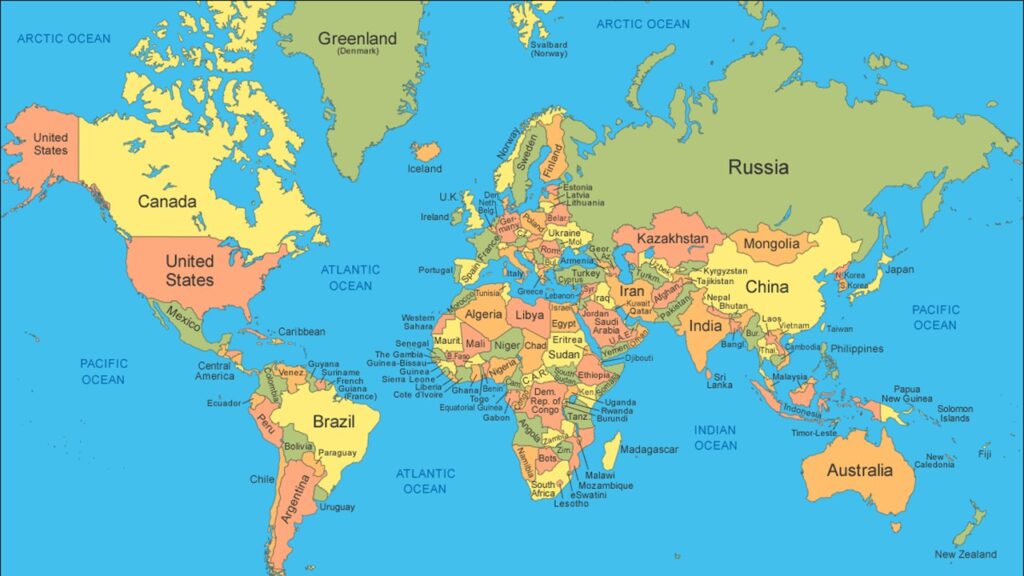
Countries can be compared in many ways, but land area is one of the clearest and most objective measures, as it shows how much physical space a nation occupies on the Earth’s surface; this comparison focuses purely on total area rather than population, economy, or influence, and when countries are ranked from largest to smaller by size, the list of the ten largest countries in the world includes Russia, Canada, China, United States, Brazil, Australia, India, Argentina, Kazakhstan, Algeria.
Russia is the largest country in the world by land area
Russia occupies more land than any other country on Earth, stretching across Eastern Europe and Northern Asia. Its immense size covers multiple climate zones, time zones, and geographic regions. The country’s landmass alone is larger than the next two countries combined in many comparisons, which firmly places Russia at the top of global size rankings.
Canada ranks second due to its vast northern territories
Canada’s position as the second-largest country comes largely from its extensive northern lands, which include tundra, forests, and Arctic regions. Despite having a relatively small population compared to its size, Canada’s total area firmly secures its place among the world’s largest nations.
China’s size reflects its geographic diversity
China ranks among the largest countries thanks to its broad and varied geography, which includes deserts, mountains, plateaus, and fertile plains. Its land area supports a wide range of climates and landscapes, making it one of the most geographically diverse large countries in the world.
The United States holds a top position through continental scale
The United States spans a massive portion of North America, with landscapes ranging from plains and mountains to deserts and coastlines. Including its mainland and additional territories, its total land area places it consistently within the top five largest countries globally.
Brazil is the largest country in South America
Brazil dominates South America in terms of land area, covering nearly half of the continent. Its vast territory includes rainforests, rivers, and agricultural regions, making it the largest country in the Southern Hemisphere as well.
Australia is both a country and a continent
Australia’s unique position as a country that occupies an entire continent places it high on the list of the world’s largest nations. Its landmass includes deserts, coastal regions, and diverse ecosystems, contributing to its high ranking by size.
India’s large size supports a dense and varied population
India’s land area places it among the world’s largest countries, with a landscape that includes plains, plateaus, deserts, and mountain ranges. Although smaller than some others on the list, its size still ranks it within the global top ten.
Argentina is the second-largest country in South America
Argentina’s extensive territory stretches from tropical regions in the north to colder climates in the south. Its long north–south span and large land area secure its place among the largest countries by size.
Kazakhstan is the largest landlocked country
Kazakhstan holds a unique position as the largest country in the world without direct access to an ocean. Its wide степpe regions and vast open lands contribute significantly to its ranking among the top ten largest countries.
Algeria is the largest country in Africa
Algeria’s massive land area, much of which lies within the Sahara Desert, makes it the largest country on the African continent. Its size surpasses all other African nations, earning it a place in the global top ten.
When countries are ranked strictly by total land area, the ten largest nations in the world are Russia, Canada, China, the United States, Brazil, Australia, India, Argentina, Kazakhstan, and Algeria, which together represent the greatest geographic expanses on the planet.

Benzer Konular

L’espressione “le distendono i volatili” richiama un gesto molto riconoscibile nel mondo degli uccelli, legato al movimento, all’equilibrio, alla preparazione del volo e anche a momenti di semplice assestamento del corpo. I volatili, infatti, compiono spesso azioni che coinvolgono parti ben precise della loro struttura fisica, e quando si parla...

Etkinlik 2 – Doğal Sayılarda Basamak Değeri Kadir öğretmen, basamak değeri kavramına yönelik 3 farklı görev hazırlamıştır.Öğrencilerinden görev kartlarındaki sayıların basamak değerleri toplamını bulmalarını istemiştir.Recep ve Suzan, 1. Görevi yapmak için önce basamak tablosu üzerinde çalışmaya karar vermişlerdir. 1. Görev:7 806 015 239 sayısının basamak değerleri toplamını bulunuz. Milyarlar Bölüğü...

Kurtuluş Savaşı’nda Batı Cephesi Komutanı olarak büyük bir rol oynamış, sonrasında Türkiye Cumhuriyeti’nin ikinci Cumhurbaşkanı olan kişi İsmet İnönü’dür. 1. İsmet İnönü’nün Hayatı ve Askeri Kariyeri İsmet İnönü, 24 Eylül 1884’te İzmir’in Umurbey kasabasında doğmuştur. Osmanlı İmparatorluğu’nun son döneminde eğitim almış ve Harp Okulu’nu bitirerek orduya katılmıştır. Genç yaşta subaylık...
Hayvanları Koruma Günü Bencil olmama, iyilik, yardımseverlik, sevgi ve acıma duygularının geliştirilmesi amacıyla bugün kutlanır. Aynı zamanda doğanın dengesinin korunmasının önemini vurgulamak da amaçlar arasındadır. DOST HAYVANLAR Ne karıncayı incitKardeşim,Ne serçeyi kışıla.Dostumuz hayvanlarıİnsan gibi karşıla. İyilik dediğin şeyKardeşim,Karşılıksız olmalı.O kuş gibi yüreğinHep sevgiyle dolmalı. Aziz SİVASLIOĞLUBelirli Günler ve Haftalar Cumhuriyet...
En temel çocuk hakkı hangisidir aşağıdakilerden hangisidir? A) eğitim hakkıB) yaşama hakkıC) oyun hakkı Yaşama hakkı, herkesin en önemli hakkıdır, çünkü insanın yaşaması demek hayatta kalması demektir. Sen yaşıyorsan, oynayabilir, öğrenebilir ve hayallerini gerçekleştirebilirsin. Eğer biri yaşama hakkına sahip olmazsa, diğer haklar da önemli olmaz çünkü o zaman kişi hayatta...

ANDIMIZ Türküm, doğruyum, çalışkanım, İlkem: küçüklerimi korumak, büyüklerimi saymak, yurdumu, milletimi özümden çok sevmektir. Ülküm: yükselmek, ileri gitmektir. Ey Büyük Atatürk! Açtığın yolda, gösterdiğin hedefe durmadan yürüyeceğime ant içerim. Varlığım Türk varlığına armağan olsun. Ne mutlu Türküm diyene!
Bir Yorum Yazın
Ziyaretçi Yorumları - 0 Yorum